Reviving Grabar: The Role of Classical Armenian in Modern Literature and Liturgy
The Living Echo: Grabar's Enduring Voice
Imagine a language that has not been spoken as a mother tongue for centuries, yet still resonates in the sacred spaces of churches and whispers through the pages of modern poetry. This is the story of Classical Armenian, or Grabar, the foundational language of the Armenian people. More than a historical artifact, Grabar is a living bridge connecting Armenians to their 5th-century Christian heritage, their golden age of literature, and the very essence of their national identity. While it ceded its role as the vernacular to modern Eastern and Western Armenian dialects, Grabar never truly died. Today, it is experiencing a quiet but profound revival, not as a replacement for the modern tongue, but as a deep well of spiritual and artistic inspiration, challenging the notion that ancient languages belong solely to the past.
The Bedrock of Faith and Nation
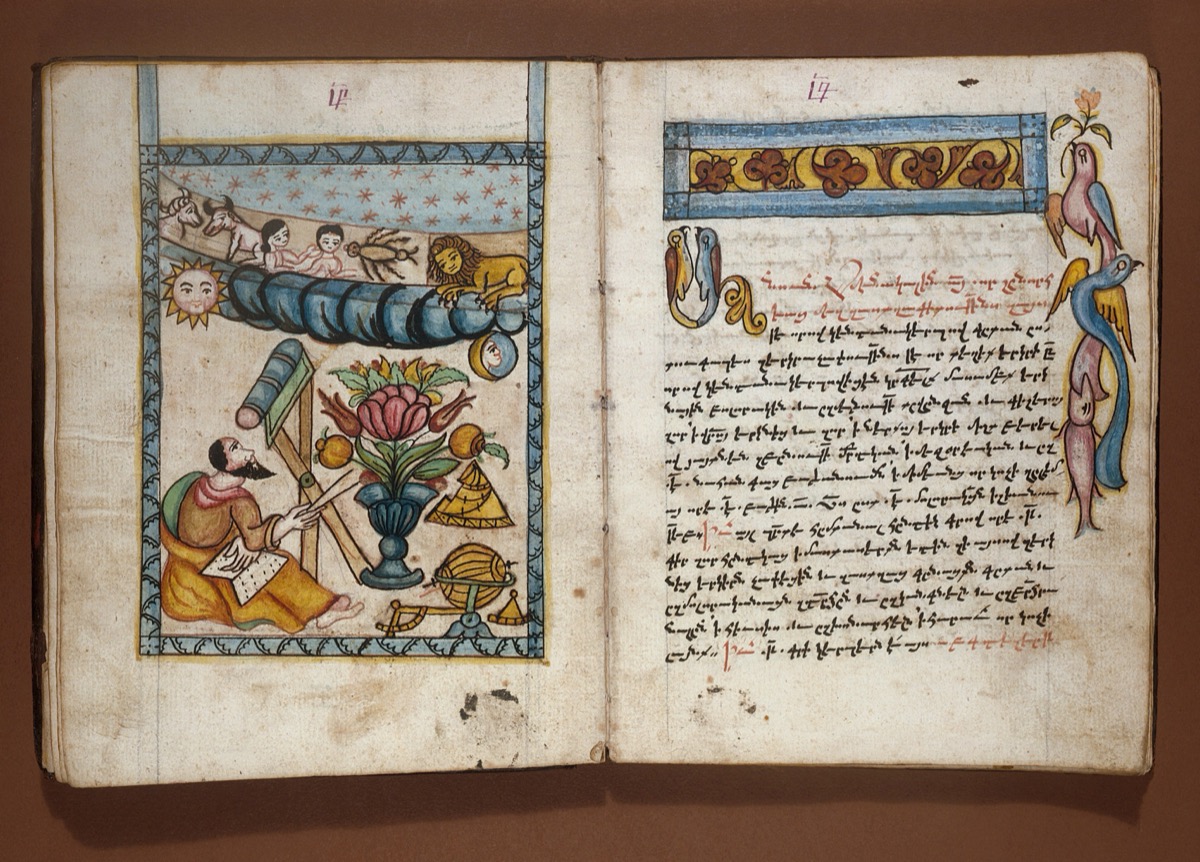
To understand Grabar's significance is to understand the formation of Armenian Christianity and literature. Created by the monk Mesrop Mashtots around 405 AD, the Armenian alphabet and the Grabar language were instruments of divine and national purpose. Their first and most monumental task was the translation of the Bible, the "Queen of Translations," which became the cornerstone of Armenian culture. This act did more than provide scripture; it forged a unique Christian identity distinct from Byzantine and Syriac influences. As recent scholarship confirms, the Armenian liturgy developed with a profound independence, forming one of the five distinct liturgical families of the Christian East.
For over a millennium, Grabar was the unchallenged language of theology, history, philosophy, and poetry. It was the tongue of Gregory of Narek's mystical Book of Lamentations and the histories of Movses Khorenatsi. Crucially, it became the sole language of the Divine Liturgy in the Armenian Apostolic Church. As the official source notes, the liturgy was celebrated exclusively in Grabar, a sacred code that set the worship apart from everyday speech, elevating it to a heavenly dialogue. This created a powerful, unifying sonic landscape for the diaspora, where the sounds of the liturgy were constant even as spoken dialects evolved and diverged.
The Liturgical Shift and Grabar's Resilience
The 19th century marked a pivotal change. The rise of national awakening and the need for broader public education led to the adoption of modern Armenian (Ashkharhabar) in schools, literature, and public life. This shift eventually reached the church. While sources like the Diocese of the Armenian Church officially list Grabar as the liturgical language, the modern vernacular is now commonly used in everyday celebrations of the Divine Liturgy to make worship more accessible to the faithful. This was a practical pastoral decision, but it risked creating a disconnect from the ancient liturgical tradition.
Yet, Grabar was not erased. As highlighted in research, it "was not pushed out of the language." It remained the language for pivotal parts of the Badarak (the Divine Liturgy), especially in major cathedral services and by traditionalist clergy. Its haunting melodies and ancient phrases, like "Der Voghormya" (Lord Have Mercy), continue to define the auditory experience of Armenian worship. This creates a unique duality: a liturgy that is both accessible in its modern explanations and hymns, yet rooted in the timeless, sacral sounds of Grabar. It serves as an audible tether to the past, a conscious preservation of a sacred heritage in a changing world.
The Modern Literary Renaissance
Perhaps the most surprising chapter in Grabar's story is its 21st-century literary revival. After its gradual retreat from secular writing by the mid-19th century, contemporary authors and poets are now returning to Grabar as a powerful artistic medium. This is not mere antiquarianism. Writers use Grabar to:
- Access a Different Consciousness: The vocabulary and syntax of Grabar offer distinct metaphors and philosophical concepts lost in modern dialects, allowing writers to explore themes of faith, eternity, and identity from a new angle.
- Create Intertextual Dialogue: By weaving Grabar phrases or whole poems into modern texts, authors create a conversation across centuries, directly engaging with the voices of Narekatsi or Egishe.
- Reclaim a Pure Linguistic Space: For some, Grabar represents an Armenian language unadulterated by foreign borrowings (especially Turkish and Russian) that entered during centuries of foreign domination, offering a purer form of expression.
This movement is not about rejecting modern Armenian but about enriching it. It treats Grabar as a deep cultural stratum to be mined, bringing its resonant power into contemporary discourse. Poetry collectives and small presses, particularly in Armenia and major diaspora centers, are publishing new works that blend linguistic eras, challenging readers to engage with their heritage actively.
Cultural Significance and Modern Relevance
The revival of Grabar transcends academia and art; it is a project of cultural memory and resilience. In a globalized world, it serves as a powerful marker of unique identity. For a nation that has survived genocide and dispersion, maintaining a connection to an unbroken 1,600-year-old written tradition is an act of defiance and survival. Learning Grabar, whether in university classes, online platforms like Magaghat.ai, or church seminars, has become a way for Armenians, especially in the diaspora, to deepen their connection to their roots in a more profound way than folklore or food alone can provide.
Furthermore, in an era of digital communication and abbreviated language, Grabar represents depth, permanence, and sacred attention. Its study cultivates patience and precision, virtues often at odds with modern pace. The language becomes a tool for mindfulness and historical perspective, reminding users that they are part of a story much larger than themselves.
Conclusion: A Bridge, Not a Relic
The story of Classical Armenian is not one of a dead language being unearthed by archaeologists. It is the story of a living tradition adapting, retreating, and re-emerging with new purpose. Grabar today is a bridge. It bridges the ancient church with the modern worshipper, allowing the faithful to touch the original spirit of their liturgy. It bridges the literary giants of the past with the creative voices of the present, creating a rich, intergenerational dialogue. Most importantly, it bridges every Armenian to the foundational moment of their written culture—the creation of the alphabet and the translation of the Bible—which secured their identity as a people. In reviving Grabar, Armenians are not looking backward with nostalgia; they are retrieving a vital part of their collective soul to illuminate their path forward, proving that some voices, though ancient, are timeless in their relevance.
Tags